About This Article
This article is written from first-person professional experience to explain technical writing across software, healthcare, and enterprise industries. It is intended for aspiring technical writers, content strategists, and professionals looking to understand the discipline in depth.
I still remember the first time someone handed me a 200-page software manual and said, “Fix this so people can actually use it.” The document was dense, jargon-heavy, and organized in a way that seemed to make sense only to the engineer who wrote it.
There were no screenshots, no step-by-step instructions, and no explanation of who the audience was. By the time I was done restructuring it, adding visuals, and rewriting it in plain language, I had stumbled headfirst into the world of technical writing, and I have never looked back.
If you are wondering what technical writing actually is, whether as a career path, a skill you want to develop, or simply something you have heard about and want to understand, you are in the right place. I am going to walk you through everything I know about technical writing, drawn from years of doing it across industries, tools, and audiences. This is not a textbook definition. This is lived experience.
- Why Technical Writing Is More Than Just Writing
- The Many Forms Technical Writing Takes
- The Skills That Actually Matter
- The Process Behind Every Great Technical Document
- Tools of the Trade
- Why Technical Writing Matters More Than Ever
- Building a Career in Technical Writing
- Common Mistakes I See (and Made Myself)
- Final Thoughts
Why Technical Writing Is More Than Just Writing
When most people hear “technical writing,” they imagine someone typing out instruction manuals in a dark office. The reality is far more dynamic. At its core, technical writing is the practice of translating complex, specialized information into clear, accurate, and usable content for a specific audience.
The keyword there is “usable.” It is not just about being clear for clarity’s sake. Every piece of technical content I have ever written had a job to do. A user guide helps someone install software without calling support.
A standard operating procedure helps a factory worker perform a task safely and consistently. An API reference helps a developer integrate a product without spending hours guessing at parameters. The writing exists to enable action.
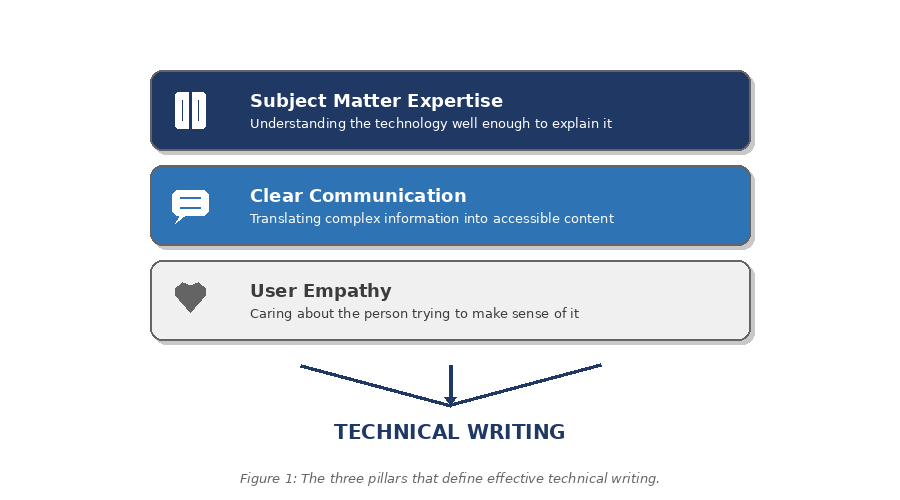
From my experience, technical writing sits at the intersection of three disciplines: subject matter expertise, communication, and user empathy. You do not have to be the smartest person in the room about the technology.
But you do have to understand it well enough to explain it, and you have to care deeply about the person on the other end trying to make sense of it.
The Many Forms Technical Writing Takes
One of the things that keeps technical writing endlessly interesting is how many shapes it takes. Over the years, I have produced all of the following types of technical content, and each one requires a slightly different mindset.
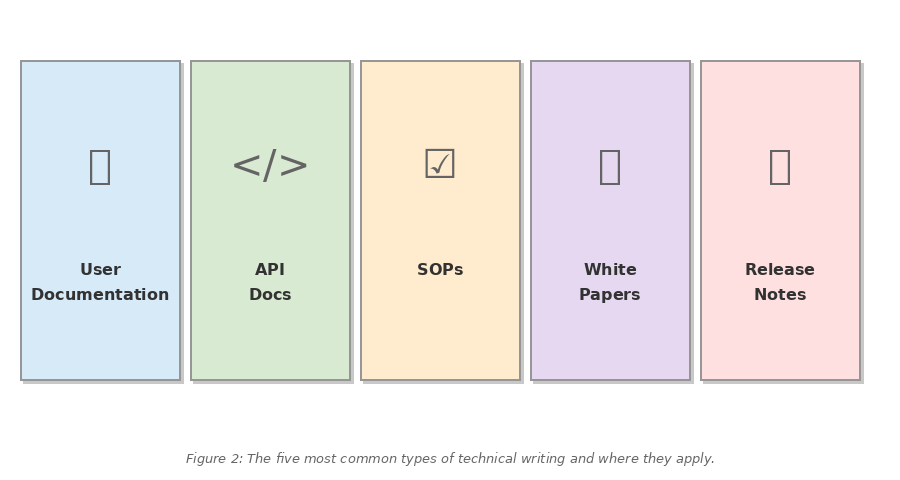
User Documentation
This is probably the most recognizable form. User manuals, quick-start guides, help center articles, and onboarding walkthroughs all fall here. The audience is typically a non-expert end user. When I write user documentation, my primary goal is to eliminate friction. If someone has to re-read a sentence twice, I have failed. If they have to look something up elsewhere because I left a gap, I have failed. If they finish the task and feel confident, I have succeeded.
API Documentation and Developer Guides
Writing for developers is a different beast entirely. Developers are busy, technically sophisticated, and have zero patience for vague language. When I write API docs, I focus on precision above almost everything else. Every parameter needs to be named, typed, and described. Every endpoint needs a working example.
Every error code needs a clear explanation. I learned early on that developers will trust documentation that shows them a working code snippet far more than documentation that describes the same thing in five paragraphs of prose.
Standard Operating Procedures (SOPs)
SOPs are the backbone of regulated industries like healthcare, manufacturing, and finance. I have written SOPs for pharmaceutical quality control labs and for onboarding workflows at software companies.
The discipline here is in the structure. An SOP must be repeatable, auditable, and exhaustive. You cannot leave room for interpretation when someone’s safety or regulatory compliance depends on following each step exactly.
White Papers and Technical Reports
These are longer-form documents that establish thought leadership, present research findings, or make a case for a technical decision. They blend technical depth with persuasive writing.
I find these some of the most intellectually demanding pieces to write because they require a deep understanding of a topic while still making it accessible to a business audience that may not share the same level of technical fluency.
Release Notes and Changelogs
Short in length but surprisingly tricky to get right. Release notes need to communicate what changed, why it matters, and whether any action is required, all in a few short lines.
I have seen release notes that were so vague they were useless, and others so technical they alienated non-developer users. The sweet spot is informative, concise, and audience-aware.
The Skills That Actually Matter
People often ask me what skills they need to break into technical writing. The answer is nuanced because this field rewards a combination of soft and hard skills that you build over time. Here is what I have found matters most.
- Information Architecture: Before you write a single sentence, you need to structure the information logically. This means understanding your audience’s mental model and organizing content in a way that matches how they think, not how the product was engineered.
- Clarity and Conciseness: Good technical writing says what it needs to say and nothing more. I cut ruthlessly. Every adjective that does not add precision, every sentence that repeats what was already said two sentences ago, gets deleted.
- Research and Interviewing: Technical writers are often not the subject matter expert. I spend a significant portion of my work time interviewing engineers, product managers, and support staff to extract the information I need. Asking the right questions is a craft in itself.
- Tool Proficiency: The modern technical writer works across documentation platforms like Confluence, MadCap Flare, or GitBook; version control systems like Git; diagramming tools like Lucidchart; and sometimes even lightweight code environments to test the very product they are documenting.
- Audience Analysis: The same information needs to be written completely differently depending on whether your reader is a first-time user, a developer, a compliance officer, or an executive. Understanding who you are writing for shapes every decision you make.
- Consistency and Attention to Detail: Documentation is only trusted when it is consistent. I maintain style guides, term glossaries, and template libraries for every major project I work on. Inconsistency in language, formatting, or terminology erodes trust fast.
I want to be honest about something: I was not naturally good at all of these things when I started. The research and interviewing piece especially took years to refine. But these are all learnable skills, and the more you practice, the more intuitive they become.
The Process Behind Every Great Technical Document
People who are not technical writers often assume the job is mostly writing. In reality, writing is probably only about a third of what I do.
The rest is process: planning, researching, reviewing, iterating, and maintaining. Here is the workflow I follow on almost every major documentation project.
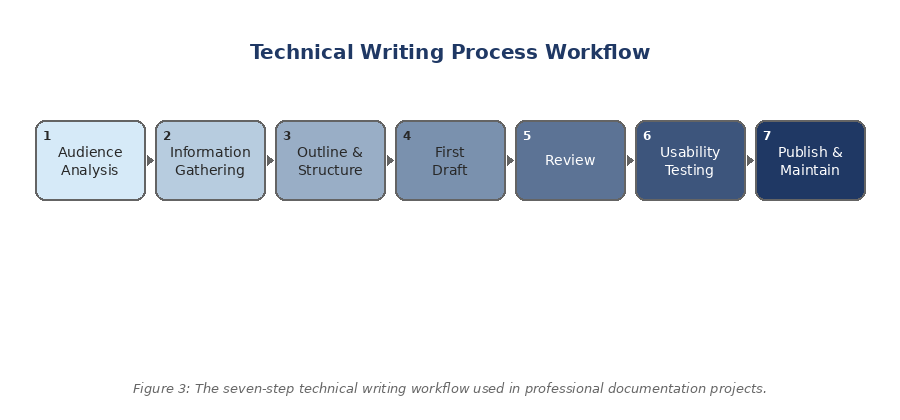
1. Audience and Purpose Analysis
Before anything else, I ask: who is reading this, why are they reading it, and what do they need to be able to do when they are done? These three questions shape everything that follows. I have started entire documentation projects from scratch because this analysis was skipped the first time.
2. Information Gathering
This is where I pull together everything I need: product demos, engineering specs, support ticket logs, and direct interviews with subject matter experts. I take detailed notes and flag every gap or area of ambiguity. The quality of your documentation can only ever be as good as the quality of your source information.
3. Outlining and Structure Planning
I never start writing from a blank page. I always outline first. For a complex user guide, this might mean sketching out every section, the order they appear, and the key tasks each section must cover. This is also where I decide which visuals are needed and where they will go.
4. First Draft
I write the first draft with one goal: get it all out. I do not agonize over word choices in this phase. I am filling in the outline, writing each section, and making sure the logic flows. Perfectionism at this stage is the enemy of progress.
5. Technical and Editorial Review
Every technical document I produce goes through at least two rounds of review: one with a subject matter expert who checks for accuracy, and one with a peer editor who checks for clarity, consistency, and style. I have found that no matter how experienced you are, you need fresh eyes on your work.
6. Usability Testing
Whenever possible, I test my documentation with real users. This might mean watching someone follow a procedure for the first time and noting where they hesitate or ask questions. These moments are invaluable. No amount of internal review catches what a real user encounter will surface.
7. Publication and Maintenance
Publishing is not the finish line. Outdated documentation is arguably worse than no documentation because it actively misleads users. I treat all living documents as ongoing responsibilities and build review schedules into my project plans from day one.
Tools of the Trade
The toolset for technical writers has evolved enormously over the course of my career. When I started, most documentation lived in Microsoft Word. Today, the landscape looks very different. Here are the tools I rely on and why.
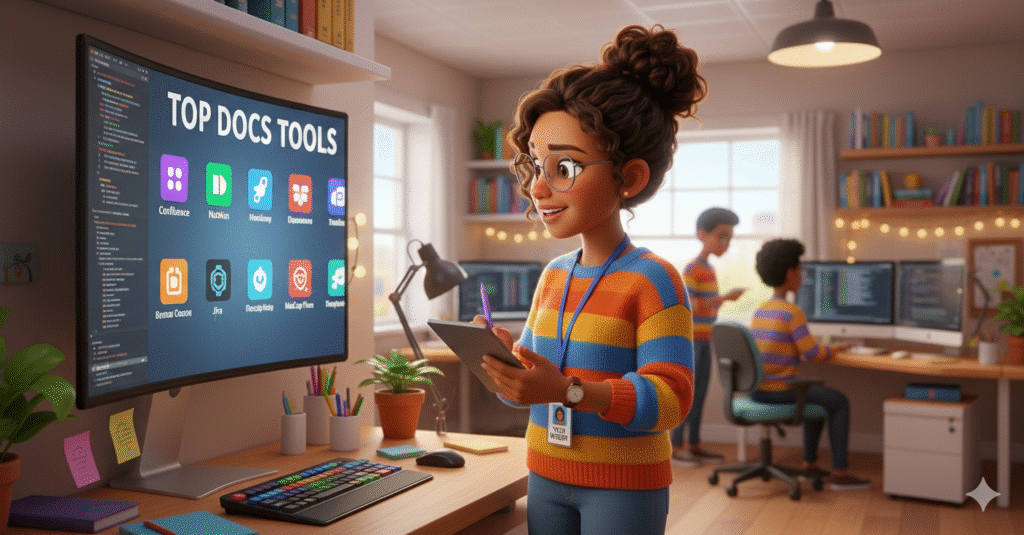
- Confluence and Notion: For internal knowledge bases and living documentation. These tools make collaboration and version tracking manageable in team environments.
- MadCap Flare: My go-to for large-scale, multi-output documentation projects. It supports single-sourcing, which means I can write once and publish to PDF, web, and mobile help simultaneously.
- Git and GitHub: Version control is no longer optional for serious technical writers. Tracking changes, collaborating with developers, and maintaining documentation alongside code are all enabled by learning Git fundamentals.
- Snagit and Camtasia: For capturing and annotating screenshots and creating instructional video walkthroughs. Visuals are not optional in modern technical documentation.
- Markdown: A lightweight syntax that has become the lingua franca for developer-focused documentation. Learning Markdown was one of the best investments I made early in my career.
- Lucidchart and Draw.io: For creating system diagrams, process flows, and information architecture maps. A well-made diagram can replace hundreds of words of explanation.
I want to add a note here about AI writing tools, since they are impossible to ignore in the current landscape. I use AI assistants to help with first drafts and to brainstorm how to phrase something I am stuck on. But I never hand the wheel over entirely. Technical accuracy, structural judgment, and audience awareness still require a human expert behind the work. AI is a tool in the toolkit, not a replacement for the technical writer.
Why Technical Writing Matters More Than Ever
The world runs on software. And software that cannot be understood by its users is software that fails, regardless of how brilliant the engineering underneath it is.
I have seen multi-million dollar products struggle with adoption simply because the documentation was inadequate. I have also seen modest products punch far above their weight because they were supported by exceptional documentation.
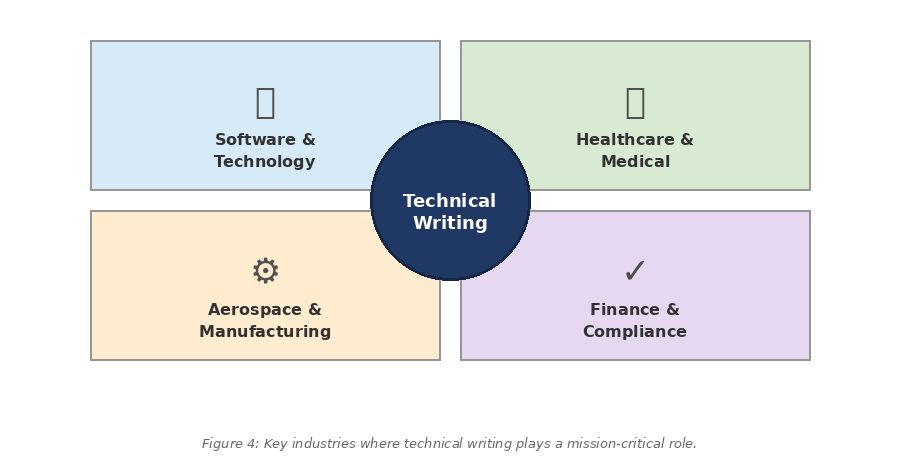
Beyond software, technical writing is critical in healthcare, where unclear instructions on medical devices and drug protocols can directly harm patients. It is critical in aerospace and manufacturing, where procedure documents determine whether complex systems operate safely. It is critical in finance, where regulatory filings and compliance documentation need to be both accurate and comprehensible to auditors and executives alike.
From where I sit, technical writing is one of the most underestimated professions in the knowledge economy. It is what makes expertise transferable, systems operable, and products adoptable.
Building a Career in Technical Writing
If you are thinking about technical writing as a career, here is what I wish someone had told me at the beginning.
You do not need a computer science degree. I have worked alongside technical writers with backgrounds in linguistics, journalism, biology, law, and engineering. What matters more than your educational background is your ability to learn quickly, communicate clearly, and work collaboratively with subject matter experts.
Build a portfolio early. Document a piece of open-source software. Rewrite a badly written instruction manual as a side project. Contribute to a developer documentation community. When hiring managers look at technical writing candidates, they want to see evidence of your ability to take complex information and make it accessible. A single strong portfolio piece is worth more than a hundred pages of resume bullet points.
Learn the basics of the tools and technologies used in your target industry. If you want to write for software companies, get comfortable with Markdown, basic HTML, and Git. If you want to write for the pharmaceutical sector, learn the regulatory framework around technical documentation in that space.
As for career growth, technical writing is not a ceiling job. Senior technical writers often move into content strategy, documentation management, UX writing, or product management. The skills you build as a technical writer translate across disciplines in ways that can take you in many directions.
Common Mistakes I See (and Made Myself)
Because this article is personal, I want to be transparent about the mistakes I made early on and the ones I see newer writers repeat today.
- Writing for yourself instead of your audience: This was my biggest early mistake. I wrote in a way that made sense to me after days of research, not in a way that made sense to someone reading the document cold for the first time. Getting outside your own head is a discipline you have to actively practice.
- Skipping the review cycle: When deadlines are tight, it is tempting to publish quickly. Every time I have done this without adequate review, I have regretted it. Errors in technical documentation have real consequences.
- Assuming the reader knows what you know: Technical writers live with information for so long that they forget what it is like to not know it. The curse of knowledge is real. Always go back and read your work as a first-time reader.
- Neglecting document maintenance: Publishing documentation and walking away is how documentation dies. I always try to build a review schedule into project timelines so that content stays accurate as products evolve.
- Underestimating visuals: Early in my career I thought words were enough. They are not. Screenshots, diagrams, and annotated images dramatically improve comprehension and completion rates. If you are not incorporating visuals into your documentation, you are leaving a major lever unpulled.
Final Thoughts
Technical writing is one of those professions that does its best work invisibly. When documentation is truly excellent, users do not notice it. They just accomplish their goals without frustration and move on. The writing gets out of the way. That is the highest compliment a technical document can receive.
For me, the profession has been a continuous exercise in intellectual humility and curiosity. I have had to learn the basics of enterprise networking, pharmaceutical manufacturing, financial compliance, cloud infrastructure, and more, all to communicate those subjects clearly to others. Every project has made me a more careful thinker and a more empathetic communicator.
If you are considering technical writing as a path, I can tell you from direct experience that it is a career with genuine intellectual depth, real-world impact, and growing demand. The need for people who can make complex things understandable is not going away. If anything, it is accelerating.
1. Do I need a technical background to become a technical writer?
Not necessarily. While a background in STEM can be helpful when writing for highly technical audiences like software developers or engineers, it is far from required. Many successful technical writers come from humanities backgrounds such as English, journalism, or communication. What matters most is your ability to quickly learn new subjects, ask smart questions, and translate what you learn into clear and structured content. Strong writing fundamentals and genuine curiosity about how things work will take you further than a specific degree.
2. What is the difference between technical writing and content writing?
The two are distinct disciplines with different goals. Content writing is primarily focused on engagement, brand building, and driving traffic. It includes blog posts, social media content, and marketing copy. Technical writing, on the other hand, is focused on accuracy, usability, and task completion. Its primary goal is not to entertain or persuade but to inform and enable. A technical writer asks: “Can the reader do what they need to do after reading this?” A content writer asks: “Will the reader find this interesting and come back for more?” Both are valuable, but they serve very different purposes.
3. How do technical writers work with subject matter experts?
Collaboration with subject matter experts (SMEs) is one of the most important and sometimes most challenging aspects of the job. Technical writers schedule interviews with SMEs to extract the information they need, then translate that information into user-friendly documentation. The key is building trust with SMEs by demonstrating that you understand their domain well enough to ask meaningful questions, without pretending to know more than you do. I always send SMEs a list of questions in advance so they can prepare, and I follow up in writing after conversations to confirm my understanding. Most engineers and product managers appreciate a technical writer who makes their work accessible to end users because it ultimately reduces the burden on them to handle support requests.
4. Is technical writing a good career in the age of AI?
This is a fair question and one I think about seriously. AI tools can generate first drafts, suggest phrasing, and format content faster than any human. But they cannot interview engineers, evaluate whether a procedure is accurate and safe, apply judgment about what a first-time user genuinely needs, or take responsibility for the accuracy of safety-critical documentation. The role of the technical writer is evolving rather than disappearing. Writers who learn to work alongside AI tools while bringing deep subject matter collaboration, structural judgment, and quality assurance to the table will find that demand for their skills remains strong. In fact, as AI generates more raw content, the need for expert editors and documentation strategists has increased in many organizations.
5. What is the best way to build a technical writing portfolio from scratch?
The best portfolios I have seen from entry-level writers were built through projects, not job titles. Here are some approaches that work well. First, pick a piece of open-source software you use and document a feature that is poorly explained or not documented at all. Second, take an existing user manual for a product you own and rewrite it to demonstrate your ability to improve clarity and structure. Third, contribute to a documentation community such as Google Season of Docs or open-source projects on GitHub that actively welcome documentation contributions. Fourth, create a sample API reference or quickstart guide for a free public API. Each of these projects gives hiring managers a concrete window into how you think, structure, and communicate, which is ultimately all they want to see.