

I was eleven years old when I wrote my first story.
It was six handwritten pages about a boy who discovers a hidden door in his school library that leads to a world where books come alive. The plot was derivative, the dialogue was wooden, and the ending made very little sense.
I thought it was the greatest thing I had ever created. I still have it in a cardboard box under my bed.
That story was the beginning of a relationship with creative writing that has shaped more of my life than almost anything else. Over the years I have written short fiction, essays, poetry, screenplays, and long-form narrative journalism. I have submitted to literary magazines and been rejected hundreds of times. I have also been published, recognized, and paid.
I have taught creative writing workshops, coached emerging writers, and spent more hours than I can count staring at a blinking cursor, searching for the right word.
So when someone asks me what creative writing is, I do not reach for a textbook. I reach for everything I have lived inside this craft. That is what this article is: a complete, honest, and personal answer to that question.
- How I Define Creative Writing
- The Major Forms Of Creative Writing
- Which Elements Should You Master
- How Does A Creative Process Look Like
- Building the Habits That Actually Sustain a Writing Life
- The Tools and Environment of a Working Writer
- Creative Writing as a Career: The Honest Picture
- What Creative Writing Has Given Me That Nothing Else Has
- Frequently Asked Questions
How I Define Creative Writing
The academic definition of creative writing is usually something like: any writing that goes beyond the boundaries of professional, journalistic, academic, or technical forms of literature. It is characterized by imagination, originality, and expression. That definition is accurate but it is also a little bloodless. It describes the borders of the thing without touching the heart of it.
Here is how I would define it from the inside: creative writing is the deliberate use of language to create an experience in the reader’s mind. Not just to inform them. Not just to persuade them. But to make them feel something, see something, understand something they could not have accessed through a news article or a how-to guide.
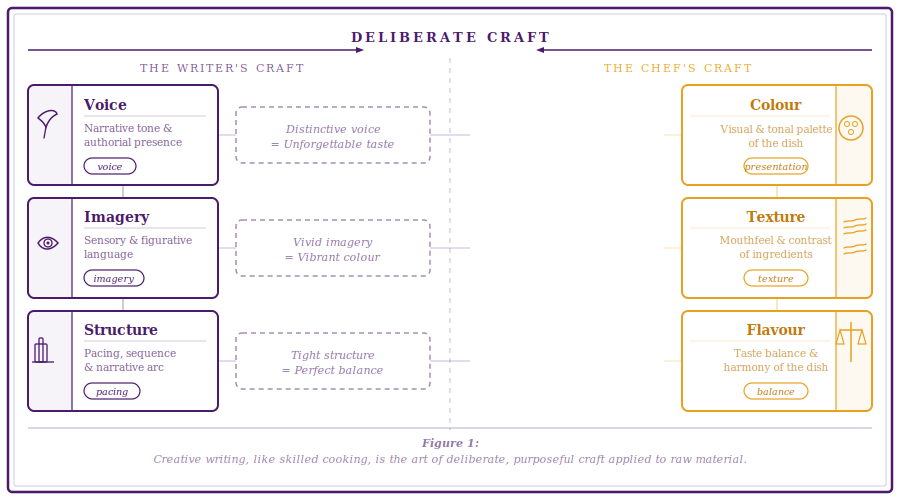
The word I keep coming back to is “deliberate.” Creative writing is not just expressing yourself freely with no craft involved. Every serious creative writer I know is deeply intentional about their choices of structure, voice, imagery, pacing, and form. The freedom in creative writing is not the absence of rules but the ability to choose which rules serve your work and which ones you can break to greater effect.
I think about it like cooking. You could throw ingredients together randomly and call it food. But a skilled cook selects each ingredient deliberately, applies technique, and aims for a specific result in the mouth of the person eating. Creative writing is the same act of skilled, intentional craft, applied to language.
The Major Forms Of Creative Writing
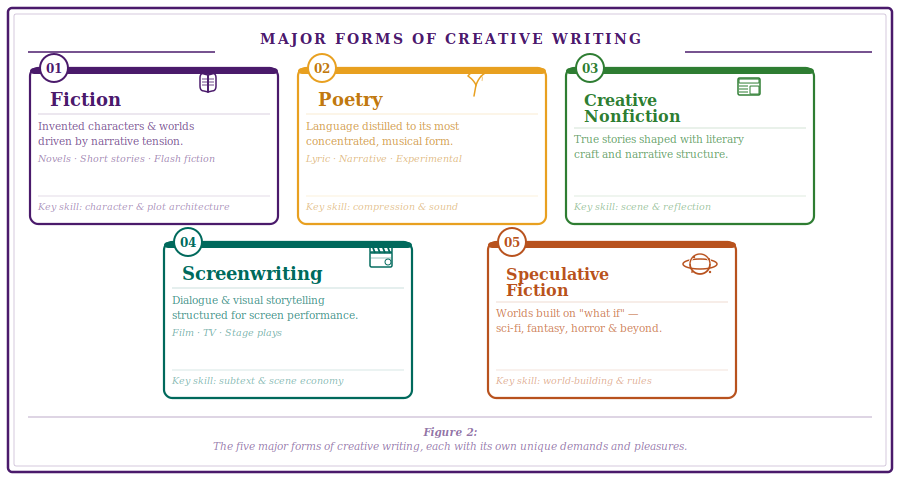
Creative writing is not a single thing. It is a family of related forms, each with its own conventions, demands, and pleasures. Here is my personal experience with the major ones.
Fiction
Fiction is where I started and where I always come back to. It encompasses everything from flash fiction of a few hundred words to novels of several hundred thousand. Short stories taught me economy: every sentence has to earn its place. When I wrote my first novel, I learned something else entirely: sustained narrative requires an architecture. You cannot just write forward and hope it holds. You have to understand structure, plant seeds early, and create the invisible scaffolding that makes a long work feel inevitable rather than accidental.
The heart of good fiction, I have come to believe, is character. Readers will follow an interesting person into almost any situation. They will not follow a boring person through the most dramatic plot in the world. Character is everything.
Poetry
Poetry is the form that has taught me the most about language itself. Every word in a poem carries weight not just from its meaning but from its sound, its rhythm, and its visual presence on the page. I came to poetry reluctantly. It felt opaque and intimidating. But the more I practiced it, the more it changed how I wrote everything else. After spending serious time with poetry, my prose became tighter, more sonically aware, and more attentive to the emotional charge of individual words.
Poetry does not require rhyme, despite what many people assume. Contemporary poetry is more likely to use free verse, where the formal elements are internal rhythm, line breaks, and image density rather than end-rhyme and strict meter.
Creative Nonfiction and Personal Essays
This is the form I find most challenging and most rewarding. Creative nonfiction uses the tools of fiction, scene-setting, character, dialogue, tension, and metaphor, to tell true stories. The personal essay, memoir, and literary journalism all fall here. What makes this form difficult is that you are constrained by what actually happened while still being responsible for the craft of how you tell it. And when you write about yourself and your real life, there is no hiding behind invented characters.
Screenwriting and Playwriting
Writing for screen and stage strips away everything that fiction allows. There is no internal monologue, no narrative description of feeling, no authorial voice. Everything must be visible or spoken. It taught me to externalize: to find the physical behavior that expresses the internal state, to write dialogue that carries subtext without being on the nose, and to trust the audience to complete what the page only implies.
Speculative and Genre Fiction
Science fiction, fantasy, horror, romance, and mystery each carry their own conventions and expectations. I have written in a few of these spaces and found that genre fiction is far more technically demanding than its reputation suggests. The world-building required in speculative fiction alone is an enormous undertaking. And genre readers are sophisticated audiences who know the conventions intimately and notice immediately when a writer does not.
Which Elements Should You Master
Regardless of which form you write in, there is a shared set of craft elements that underpin all serious creative writing. These are the things I study, practice, and return to constantly.
Voice
Voice is the personality of your writing. It is the specific way you arrange words, the rhythm of your sentences, the things you notice and choose to include, the attitude you bring to the subject. Voice is what makes one writer’s work unmistakably theirs, even without a byline. Developing a distinctive voice takes years. It happens by reading voraciously and writing constantly, by imitating writers you admire until those influences compost into something new, and by having the courage to trust your own way of seeing.
Show, Don’t Tell
This is the most repeated piece of craft advice in writing workshops, and for good reason. Telling a reader “she was angry” hands them a label. Showing them the tightened jaw, the short clipped answers, the way she set down her glass too hard, puts them in the scene. They arrive at the emotion themselves, which is a far more powerful experience than being told what to feel.
I want to add a nuance here: telling is not always wrong. Sometimes telling is efficient and the right choice. The skill is knowing when showing is worth the extra space it takes and when a clean line of telling is exactly what the writing needs.
Scene and Summary
Scene puts you in a specific moment in real time: dialogue, action, sensory detail. Summary compresses time and reports what happened without dramatizing it. Strong creative writing moves fluidly between the two. Not every moment deserves a full scene. Knowing which moments to dramatize and which to summarize is one of the most important structural instincts a writer can develop.
Tension and Conflict
No tension, no story. This is as true for a personal essay about a quiet Sunday morning as it is for a thriller with a ticking clock. Tension does not require explosions. It requires competing desires, unresolved questions, or a gap between what is and what the character wants. I ask of almost every scene I write: what does someone want here, and what stands in the way? If the answer to both parts is not clear, I am not yet done.
Imagery and Specificity
Abstract language floats above the reader’s experience. Specific, concrete imagery lands in the body. “A car” is forgettable. “A rusted 1987 Buick with a cracked windshield and a pine-tree air freshener dangling from the mirror” creates a world and implies a character. Specificity is where creative writing earns its power. The more precisely you see, the more vividly your reader will see.
“The more precisely you see, the more vividly your reader will see. Specificity is where creative writing earns its power.”
How Does A Creative Process Look Like
There is a romantic image of the creative writer: struck by inspiration, writing in a white heat, producing finished pages that barely need revision. I have met this version of the process exactly once in twenty years of writing, and I was feverish with the flu at the time, so I am not sure it counts.
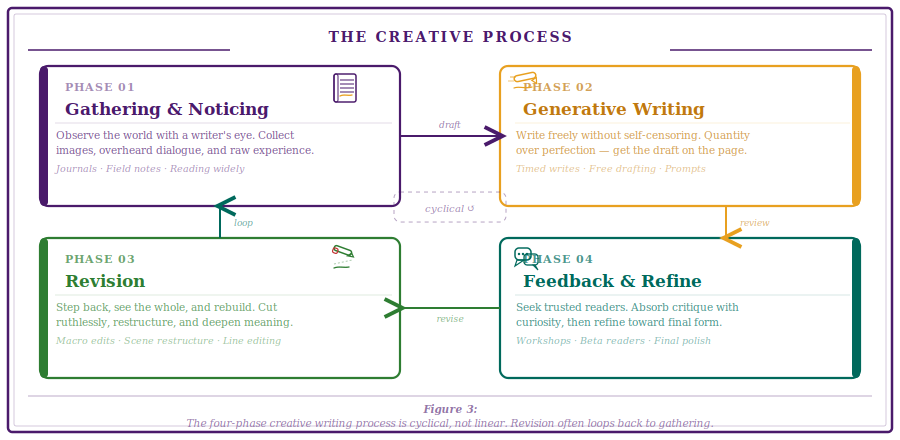
The reality of my creative process, and of most serious writers I know, looks considerably less glamorous. Here is what it genuinely involves.
Gathering and Noticing
Creative work begins long before I sit down to write. I carry a small notebook everywhere and have for the past fifteen years. In it goes: overheard conversations, images that catch me off guard, questions I cannot stop thinking about, memories that surface unexpectedly, observations about how people behave when they think no one is watching. This is the raw material, and gathering it is as much part of the practice as the actual writing.
The Generative Phase
When I begin a new piece, I give myself permission to write badly. This phase is about generating material, not judging it. I write fast, I follow tangents, I let scenes go places I did not plan. The internal critic needs to be locked out of the room during this phase. Its job comes later. Many writers I work with struggle to get through this phase because they edit as they go, strangling the generative process before it can produce anything worth editing.
Revision: Where the Real Work Lives
I have heard the phrase “writing is rewriting” more times than I can count, and I believe it completely. My first drafts are always worse than I want them to be. Most of the work happens in revision. This is where I cut what is not earning its place, deepen what is thin, fix the structural problems, find the real emotional core of the piece, and get the language down to its sharpest possible version.
I revise in multiple passes with different focuses. One pass for structure and logic. Another for character and emotional truth. Another for line-level prose quality. Another for cutting. I rarely stop before five passes on any piece I care about.
Feedback and Community
Writing is a solitary act but it should not be a solitary practice. I have benefited enormously from writing workshops, trusted readers, and literary communities. Feedback from careful readers tells you things about your work that you cannot see yourself because you are too close to it. Learning to receive feedback without defensiveness, to separate useful criticism from noise, and to make your own final decisions about what to act on is a skill that takes real maturity to develop.
Building the Habits That Actually Sustain a Writing Life
I am frequently asked whether I wait for inspiration before I write. The short answer is no, and I stopped waiting about twelve years ago. Inspiration is real, but it is not reliable. Habit is what sustains a writing practice when inspiration does not show up.
- Write daily, even briefly: I write every morning before I do anything else, including checking my phone. Some mornings it is two hours of focused work. Some mornings it is fifteen minutes of journal writing. What matters is the unbroken chain, the ritual of showing up to the page regardless of mood or circumstance.
- Read with a writer’s eye: Active reading is one of the most powerful forms of writing practice. When I read something that affects me deeply, I stop and ask why. What did the writer do there? How did they create that effect? How are they handling structure, pacing, or point of view? I read across genres and forms, including things outside my comfort zone.
- Keep a commonplace book: For years I have maintained a notebook where I copy out sentences, passages, and images from other writers that stop me cold. Reading them back is like returning to a collection of evidence about what language can do at its best. It fuels my ambition and calibrates my ear.
- Protect the creative space: This means different things for different writers. For me, it means no music with lyrics when I draft, a specific chair I only use for writing, and a rule that I do not check email until after my morning writing session. Ritual and environment matter more than people admit.
- Embrace the bad days: Some writing sessions produce pages worth keeping. Others produce nothing usable. Both are necessary. The bad days are when you are doing the deeper work of your craft, even when the output does not show it. I have written some of my best work in the sessions immediately following my worst.
- Finish what you start: This is hard advice but important advice. Abandoned drafts teach you very little. A finished first draft, however rough, teaches you the full shape of a piece and shows you problems you could not have seen until you reached the end. Finishing is a discipline that builds real craft.
These habits did not come naturally. They were built one day at a time, through false starts, broken streaks, and restarts. Every serious writer I admire has some version of this battle with regularity. The ones who persist are the ones who keep showing up.
The Tools and Environment of a Working Writer
People ask about my writing tools more than I expect. The honest answer is that the tools matter less than the habit, but they are not completely irrelevant. Here is what I actually use and why.
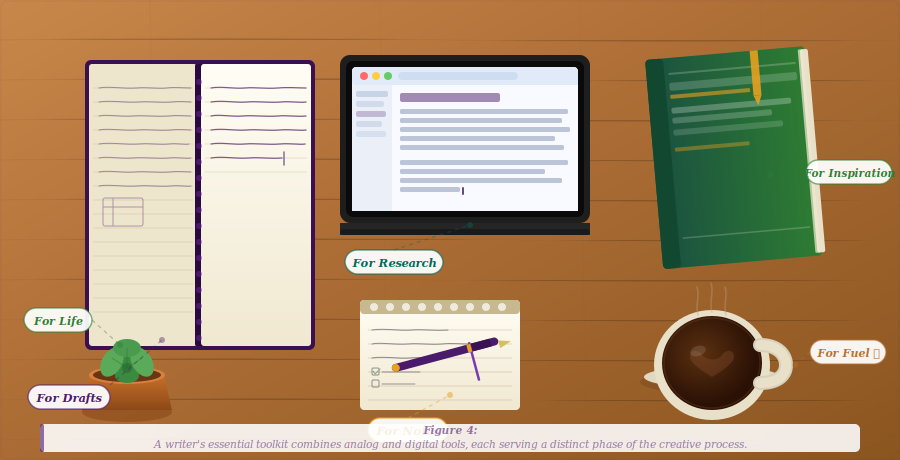
- Scrivener: For long-form projects like novels and book-length essays, Scrivener is indispensable to me. Its ability to break a manuscript into moveable sections, maintain a separate research folder, and give you a cork board view of your structure makes managing complexity vastly easier than a single Word document.
- Plain text editors: For short-form work and drafting phases where I want zero visual distraction, I use a minimal text editor. No formatting, no toolbars, just words on a screen. Some of my favorite writing apps in this category include iA Writer and Ulysses.
- Paper notebooks: I am a committed analog thinker when it comes to the early stages of a project. There is something about the slow, physical act of handwriting that engages a different quality of thought than typing. I always begin new projects by writing long, messy, exploratory pages by hand before I go anywhere near a screen.
- Reference and research tools: Depending on the project, I use Zotero for managing research sources, physical books extensively annotated in the margins, and specialist databases for projects requiring factual accuracy. Creative nonfiction especially demands rigorous sourcing.
- AI writing tools: I want to address this directly. I have experimented with AI writing tools and found them genuinely useful for specific tasks: breaking through a stuck scene, generating alternative phrasings when I am dissatisfied with my own, or rapid brainstorming for plot or structural options. What I do not use them for is producing finished creative prose. The voice that comes from AI is not mine, and the whole point of creative writing is the irreplaceable particularity of a specific human mind perceiving the world in its own way.
On the question of environment: I have written in coffee shops, in library carrels, on trains, and in a garden shed I converted into a studio. What matters is that you know what conditions allow you to concentrate and that you create those conditions as reliably as you can.
Creative Writing as a Career: The Honest Picture
I want to be honest about the professional side of creative writing because there is a lot of mythology around it and the reality deserves to be spoken plainly.
Very few writers earn a living solely from writing fiction or poetry. The economics of literary publishing are genuinely difficult and have been for a long time. Most working writers I know support their creative work through some combination of: teaching creative writing at a university or in community workshops, writing for magazines and online publications, copywriting or content work that pays the bills while the literary work continues on the side, grants and fellowships, or speaking and workshop fees.
None of this is discouraging if you go in with clear eyes. I have found that the money from teaching and commercial writing has never diminished my love of the literary work. If anything, it has clarified what I value about it. The creative practice is not contingent on commercial success. It is sustained by the practice itself.
There are also career paths that put creative writing skills at the center without requiring you to publish a novel: UX writing, copywriting, speechwriting, narrative game design, content strategy, ghostwriting, and editorial work all draw heavily on creative writing capabilities. The skills transfer widely.
If a literary career is your goal, here is the advice I wish someone had given me earlier: build your body of work first. Submit to literary magazines consistently. Enter competitions. Attend residencies when you can. Build the work before you worry about the business of it. Publishers and agents respond to work that is ready, not to ambition that is not yet on the page.
What Creative Writing Has Given Me That Nothing Else Has
I want to end the main body of this article with something personal, because personal honesty is the whole premise of this piece.
Creative writing has given me a way to process experience that I cannot access any other way. When something happens to me that is too complicated, too painful, or too strange to understand immediately, I write about it. Not because the writing explains it. Often it does the opposite: it shows me how much more complex the thing was than I had realized. But the act of putting it into language and form gives me a relationship to it that is different from simply living through it.
Creative writing has also given me empathy in a way that is hard to quantify. Writing fiction requires you to inhabit other people’s perspectives with sincerity, to find the internal logic of a character whose choices you might not understand or approve of, to give them full humanity even when they behave badly. That practice bleeds into how I move through the world and how I try to understand people who are not like me.
And it has given me a community. The world of writers, readers, editors, and teachers who take language and story seriously is a world I am grateful to belong to. The conversations in that community, about craft, about meaning, about what literature can do that nothing else can, are among the best conversations of my life.
If you are standing at the beginning of a creative writing practice, wondering whether it is worth the effort, the uncertainty, and the vulnerability, the answer from where I sit is an unambiguous yes. Not because it will be easy. It will not. But because the practice of attending closely to language, to experience, and to the inner lives of imagined and real human beings is one of the most fully alive things you can do.
Frequently Asked Questions
1. Can creative writing be taught, or is it purely a natural talent?
This is one of the oldest debates in literary education and my answer is clear: the craft absolutely can be taught, and it must be studied seriously. Natural aptitude for language and storytelling exists on a spectrum, but craft knowledge, structural understanding, an ear for prose rhythm, techniques for building tension and character, and the habit of revision are all learnable. Most of the celebrated writers I know credit teachers, workshops, and intensive study of other writers’ work as pivotal to their development. What cannot be taught is the desire to write and the willingness to keep going through difficulty. But assuming that desire exists, craft education makes an enormous difference.
2. How do I overcome writer’s block?
Writer’s block is real but it is usually a symptom of something specific rather than a mysterious general condition. In my experience, it falls into a few categories. The first is fear: fear of writing badly, fear of judgment, fear of not meeting your own expectations. The solution is lowering the stakes through freewriting, writing that is explicitly not for anyone else to see. The second cause is a structural problem you have not yet solved consciously: your instincts know something is wrong with the piece but your conscious mind has not caught up. The solution here is to step back and diagnose the structural issue rather than trying to push forward. The third cause is simply exhaustion or depletion. The solution is input rather than more output: read, observe, take walks, have conversations, refill the well. In all cases, the worst response is to wait passively for the block to lift. Active diagnosis and targeted action almost always break it faster.
3. What is the best way to develop a distinctive writing voice?
Voice develops through two parallel practices: reading deeply and writing consistently. On the reading side, do not limit yourself to one genre or style. Read writers whose voices are radically different from each other: spare minimalists, baroque maximalists, formal essayists, colloquial storytellers. As you read, pay attention to what each writer is doing with sentence length, syntax, diction, and rhythm. Then imitate them deliberately. This sounds counterintuitive, but conscious imitation of writers you admire is how you internalize techniques that eventually become your own. On the writing side, give yourself permission to have opinions on the page. Voice is not just style, it is sensibility: the way you think about the world, what you notice, what you find funny or sad or absurd. The more you trust that sensibility and stop trying to write like a generic idea of a writer, the more your actual voice will emerge. Voice tends to arrive slowly, as a composite of everything you have read and everything you have lived.
4. Should I share my creative writing publicly, and when am I ready?
Sharing work publicly is a deeply personal decision and there is no universal answer. What I can offer is this: sharing too early can be damaging if you receive feedback before you have the craft foundations to evaluate it critically, or if harsh responses discourage you before the practice has had time to take root. Sharing too late can mean missing years of the feedback and community that accelerate growth. A useful middle ground is to begin by sharing with a small, trusted group: a workshop, a writing group, or a single trusted reader who is both honest and supportive. Once you have developed some resilience and craft confidence, submitting to literary magazines and public platforms becomes much less fraught. There is no moment when you will feel completely ready. But there is a moment when your work is ready enough to survive the encounter with readers, and getting there requires finishing pieces and sharing them before you feel entirely confident.
5. How does creative writing differ from journaling, and does journaling count as practice?
Journaling and creative writing serve different purposes and develop different capacities, though they can overlap productively. Journaling is primarily about processing personal experience for yourself, with no audience in mind. It is honest, immediate, and unburdened by craft considerations. Creative writing, even when autobiographical, is shaped for a reader: it involves selection, structure, and the deliberate use of craft to create an experience in someone else’s mind. That said, journaling is genuinely valuable as a creative practice. It keeps you in the habit of daily writing. It builds the raw material from which creative work can be drawn. And it develops the habit of noticing, which is at the heart of all creative writing. Many writers use journaling as a warm-up, a thinking tool, or a place to work through emotional material that later finds its way, transformed, into their more crafted work. So yes, journaling counts, but only as part of a larger practice that also includes writing deliberately for a reader with craft considerations in mind.