I have spent years working with content teams, agencies, and businesses of all sizes. In that time, I have seen exactly how much the right content creation services can change the trajectory of a brand. I have also seen the chaos that follows when a business picks the wrong partner, or worse, tries to do everything in-house without the right support.
This article is my honest breakdown of digital content creation services across every major category. Whether you are a solo founder, a mid-size company, or a growing enterprise, there is a content service built for your specific needs. I will walk you through each type, what to look for, and how to decide what fits your business right now.
Let’s get into it.
- What Are Content Creation Services and Why Do They Matter?
- The Main Types of Content Creation Services
- How to Choose the Right Content Creation Agency
- What Makes a Great Content Creation Company Stand Out?
- Digital Content Creation Services by Business Size
- The Real Cost of Content Creation Services
- Red Flags to Watch Out for When Hiring Content Creation Companies
- How to Maximize Results From Your Content Creation Service
- My Final Take on Content Creation Services
- Frequently Asked Questions (FAQs)
What Are Content Creation Services and Why Do They Matter?
Content creation services are professional solutions that help businesses produce, manage, and distribute content. This includes blog posts, social media content, videos, email newsletters, infographics, podcasts, and more.
When I first started advising businesses on content strategy, most of them thought they could handle content by assigning it to whoever had extra time. That rarely works. Content is not a side task. It is a core business function that drives traffic, builds trust, and converts strangers into customers.
Professional content creation services bring three things that in-house efforts often cannot:
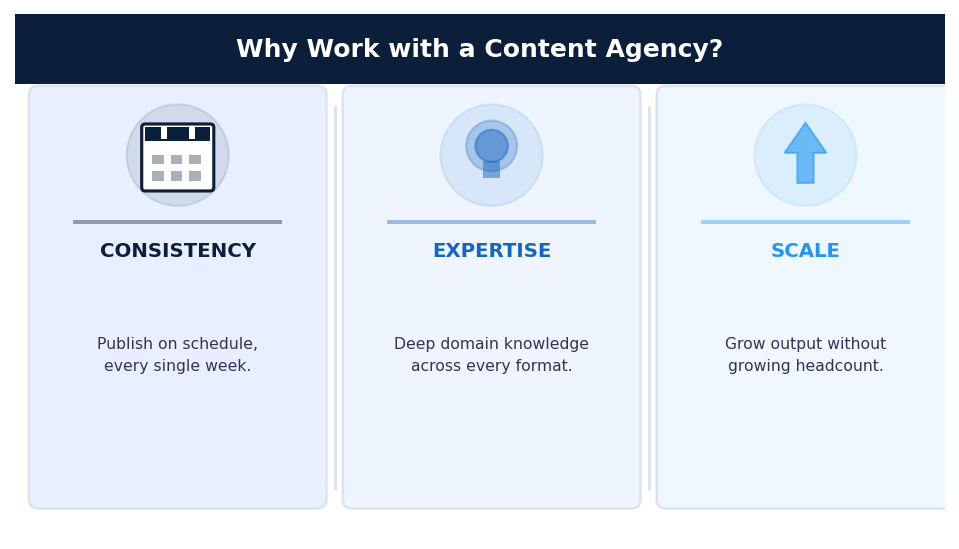
- Consistency: Content goes out on schedule, every time.
- Expertise: Writers, designers, and strategists who know their craft.
- Scale: The ability to produce more content as your business grows.
The Main Types of Content Creation Services
Not all content creation companies offer the same things. Over the years I have worked with dozens of providers and I have learned to categorize them into clear buckets. Understanding these categories saves you from hiring the wrong service for the wrong job.
1. Written Content Services
This is the foundation of most digital strategies. Written content services cover blog posts, articles, website copy, product descriptions, case studies, white papers, and email sequences.
I recommend written content services to any business that wants to rank on search engines or build authority in their niche. SEO-driven blog content, in particular, continues to deliver returns long after it is published. A well-optimized article can drive traffic for months or even years.
What to look for in a written content service:
- Native-language writers with subject matter experience
- Clear editorial process including drafts, revisions, and approvals
- SEO knowledge built into their workflow, not added as an afterthought
- A portfolio with real business results, not just writing samples
2. Social Media Content Creation Services
Social media is its own beast. I have seen businesses spend thousands on blog content while completely ignoring their social presence. That is a missed opportunity because social media is where your audience spends a significant portion of their day.
Social media content creation services handle everything from short-form posts and captions to graphic design, video reels, story templates, and full content calendars. The best services also understand each platform’s algorithm well enough to format content differently for LinkedIn versus Instagram versus X.
In my experience, the biggest mistake businesses make with social media is inconsistency. They post three times one week and go silent for two weeks. A professional social media content creation service eliminates that problem entirely. They build content in batches, schedule it out, and keep your brand visible even when you are focused on running your business.
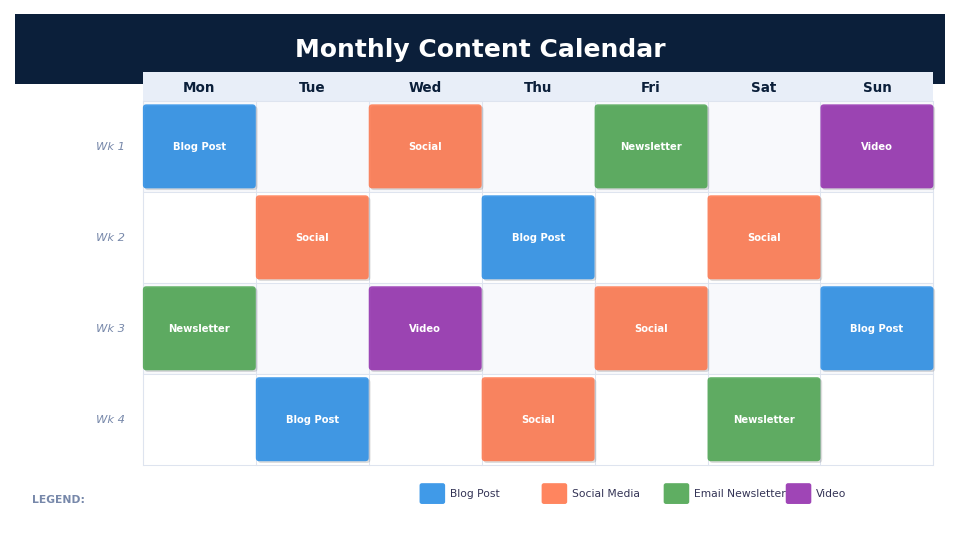
Look for services that offer:
- Platform-specific content formats tailored to your audience
- Branded graphic templates for visual consistency
- Monthly content calendars with a clear approval process
- Performance reporting so you can see what content is working
3. Video Content Services
Video is the highest-engagement content format across almost every industry and audience demographic. I have personally seen businesses triple their organic reach simply by adding consistent video to their content mix.
Video content services range from full production studios to remote video editing services that take your raw footage and turn it into polished, publish-ready content. Some services specialize in short-form vertical video for social media platforms, while others focus on long-form explainer videos, product demos, or corporate interview content.
For most small to mid-size businesses, I recommend starting with a service that can repurpose existing content into short video clips. It is cost-effective and lets you test video performance before investing in full production.
4. Graphic Design and Visual Content Services
Visual content sits at the intersection of branding and communication. Infographics, branded illustrations, presentation decks, and social media graphics all fall under this category.
I have worked with content creation companies that bundle graphic design into their packages and others that specialize exclusively in visual content. Both models work. What matters most is whether the design team actually understands your brand identity and can execute content that looks and feels like it belongs to your business.
5. Email and Newsletter Content Services
Email marketing remains one of the highest-return channels in digital marketing. The average return on investment for email is significantly higher than most other channels. Yet many businesses treat email as an afterthought.
Email content services handle everything from welcome sequences and promotional campaigns to weekly newsletters and re-engagement flows. The best email content writers understand how to write subject lines that get opens, body copy that drives clicks, and calls to action that convert.
How to Choose the Right Content Creation Agency
Choosing the right content creation agency is one of the most important decisions a marketing leader can make. I have been on both sides of this process, as a client and as a consultant helping brands evaluate agency partners. Here is my honest framework for making the right choice.
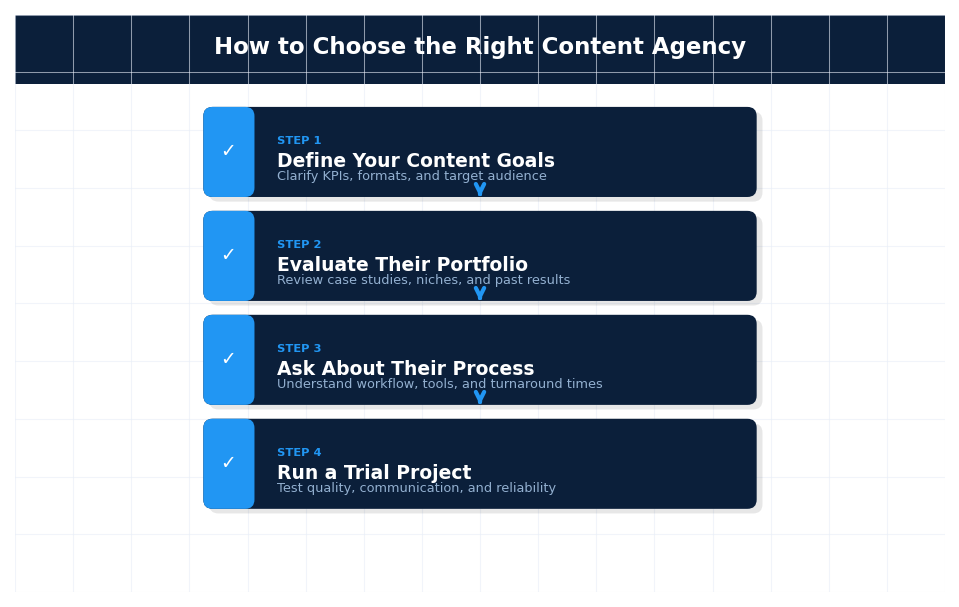
Define Your Content Goals First
Before you even talk to an agency, get crystal clear on what you need. Are you trying to rank on Google? Build a social following? Nurture leads through email? Each goal calls for a different type of content creation service.
I always tell clients to write down their top three content goals and their current biggest bottleneck. That clarity alone eliminates most mismatched agency conversations.
Evaluate Their Portfolio Against Your Industry
A good content creation agency should be able to show you work in your industry or in an adjacent one. Generic writing samples are not enough. You want to see that they understand how your audience thinks, what problems they are trying to solve, and what tone resonates with them.
Do not just look at the writing quality. Look at the strategy behind the content. Does it serve a clear purpose? Is it optimized for both the reader and search engines? Does the call to action make sense for the business goal?
Ask About Their Process, Not Just Their Output
The agencies I trust most have a clear, documented process. They can explain how they handle onboarding, how they research topics, how they handle edits, and how they measure success. If an agency cannot clearly explain their process, that is a red flag.
Ask specifically:
- How do you handle topic ideation and keyword research?
- How many revision rounds are included?
- Who owns the content once it is delivered?
- How do you report on performance?
Start With a Trial Project
I never recommend committing to a six-month retainer without running a small test first. Most reputable digital content creation services will offer a trial package or a single-project engagement. Use that to evaluate their communication, turnaround speed, quality consistency, and responsiveness to feedback.
What Makes a Great Content Creation Company Stand Out?
I have worked with content creation companies ranging from two-person boutique studios to large-scale agencies managing hundreds of clients. The best ones share a specific set of qualities that separate them from the average provider.
They Think Like Strategists, Not Just Producers
The best content companies do not just produce content on demand. They think about where that content fits in your overall marketing funnel. They ask questions like: Is this piece meant to attract new visitors or convert existing ones? Is this content designed to build trust or drive a specific action?
When a content company thinks strategically, every piece they produce has a clear purpose and a measurable goal. That mindset changes everything.
They Have Deep Bench Strength
Strong content creation companies have a team, not just a single generalist writer. A mature content team typically includes content strategists, SEO specialists, writers with niche expertise, editors, graphic designers, and project managers.
This matters because content quality degrades fast when one person is trying to do everything. A specialized team produces better work, faster, and with fewer errors.
They Communicate Proactively
One thing I consistently see in top-tier content creation agencies is proactive communication. They do not wait for clients to ask for updates. They send weekly status reports, flag potential issues early, and celebrate wins with data.
Poor communication is the number one reason I have seen client-agency relationships break down, even when the content quality was strong. Find a team that keeps you informed and treats you as a partner, not just a billing account.
Digital Content Creation Services by Business Size
One of the most useful frameworks I have developed over the years is matching content services to business size. The needs of a startup are completely different from those of a 200-person company. Here is how I think about it.
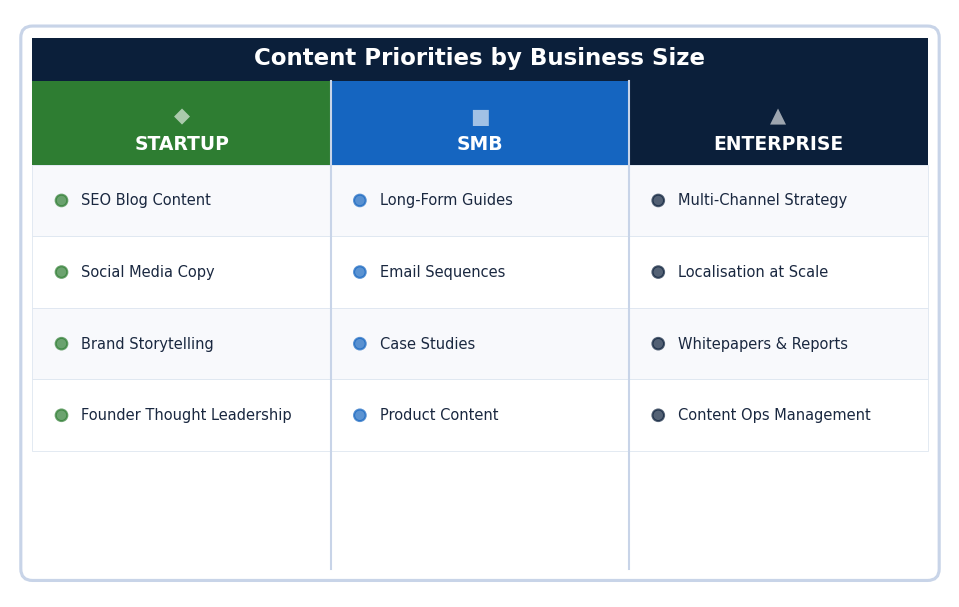
For Startups and Solopreneurs
When you are just starting out, budget is tight and every content dollar needs to count. I recommend focusing on one or two content channels maximum at this stage. Do not spread yourself thin across every platform at once.
The best content creation services for startups typically offer flexible, pay-as-you-go models. Look for freelance content marketplaces or small boutique agencies that work with early-stage businesses. Many of them offer starter packages specifically designed for companies building their content foundation.
Priority content for startups:
- A strong homepage and about page that clearly communicates your value
- Three to five core blog posts targeting your most important keywords
- A basic social media presence on one or two platforms
For Small and Mid-Size Businesses
At the small to mid-size stage, content needs become more complex. You are likely running multiple channels, trying to build SEO authority, and needing a more consistent publishing cadence.
This is where a dedicated content creation agency relationship becomes valuable. Rather than piecing together freelancers for each project, a single agency that understands your brand can handle your blog, email, and social content under one roof. That coordination saves enormous time and keeps your brand voice consistent.
At this stage I also recommend investing in a content audit every six months. A good agency will look at what content you already have, identify gaps, and help you prioritize what to create next based on business impact.
For Enterprise Businesses
Enterprise businesses have the most complex content needs. They are producing content across multiple regions, multiple product lines, and multiple audience segments. At this level, digital content creation services need to scale without sacrificing quality or brand consistency.
Enterprise content teams typically require a combination of in-house staff and an agency partner. The in-house team handles strategy, brand standards, and final approvals. The agency handles production volume and specialized skills like video, translation, or technical content.
Enterprise-level content creation companies should be able to demonstrate experience with content governance, brand style guides, multi-stakeholder approval workflows, and content performance measurement at scale.
The Real Cost of Content Creation Services
Pricing is one of the most confusing parts of the content services market. I have seen blog posts offered for fifteen dollars and blog posts offered for fifteen hundred dollars. The difference is not always quality. Sometimes it is positioning. Here is how I break down pricing in the real world.
Freelance vs. Agency Pricing
Freelancers are typically less expensive than agencies because you are paying for one person’s time, not an entire team’s overhead. However, freelancers also have capacity limits. If your content needs grow, a single freelancer may not be able to keep up.
Agencies charge more because they bring a full team, established processes, and often proprietary tools or platforms. For businesses that need consistent volume and cross-channel coordination, the agency premium is usually worth it.
Typical Pricing Ranges by Content Type
Based on my experience across many client engagements, here is a realistic pricing range for common content types:
| Content Type | Typical Price Range (USD) |
| Blog post (1,000 words) | $75 to $500 |
| Long-form article (2,500+ words) | $200 to $1,500 |
| Social media package (monthly) | $500 to $3,000 |
| Email sequence (5 emails) | $300 to $1,200 |
| Infographic design | $150 to $800 |
| Short video script + editing | $400 to $2,500 |
| Full-service agency retainer | $2,000 to $15,000/month |
These are rough benchmarks, not guarantees. Prices vary based on the agency’s location, reputation, specialization, and the complexity of your industry.
Red Flags to Watch Out for When Hiring Content Creation Companies
I have made mistakes when hiring content partners over the years. These red flags are what I learned the hard way so you do not have to.
- They promise guaranteed rankings or traffic numbers. No honest SEO or content professional can guarantee specific rankings. Google’s algorithm is too complex and competitive.
- They do not ask about your audience. If a content company does not want to know who you are writing for, they are producing generic content that will not perform.
- They have no defined revision process. Clear revision terms are a sign of a professional operation. Vague promises of ‘unlimited changes’ often lead to scope creep and frustration.
- They cannot show you real results. Any established content creation agency should be able to share case studies or performance data from past clients.
- They are not asking questions before quoting. A good agency takes time to understand your business before proposing anything. A quick quote without discovery is a warning sign.
How to Maximize Results From Your Content Creation Service
Even the best content creation service will underperform if you are not set up to work with them effectively. Here is what I tell every client before they onboard with a new content partner.
Create a Brand Voice Document
A brand voice document tells your content team how your brand sounds in writing. It covers things like tone, vocabulary preferences, what you do and do not say, and how you address your audience. This single document can dramatically reduce revision cycles and ensure that content sounds like it came from your brand, not a generic content mill.
Share Access to Your Analytics
Give your content team access to your Google Analytics, Search Console, or social media insights. The more they understand about what is already working, the better they can optimize future content. Many businesses keep their analytics private from vendors, which leaves the content team working blind.
Be Responsive and Available
The best content partnerships I have seen are ones where the client is engaged and responsive. Approve drafts promptly. Give clear feedback. Answer questions when your agency needs direction. The faster the feedback loop, the better the final content output.
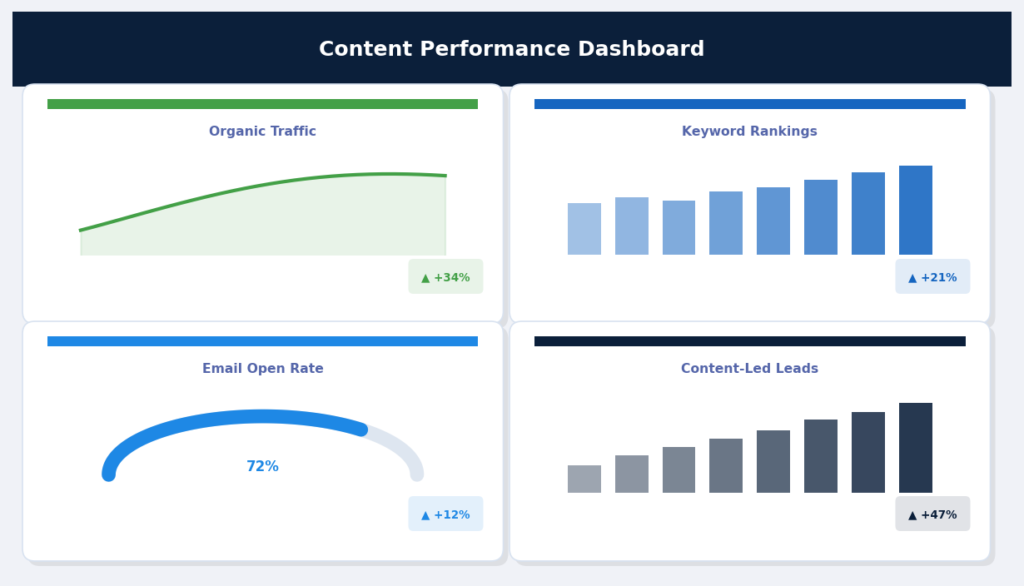
Track Performance, Not Just Volume
Measuring success by how many pieces of content you produced is a vanity metric. Measure what matters: organic traffic growth, keyword ranking improvements, email open and click rates, social engagement rates, and ultimately, leads and revenue attributed to content.
My Final Take on Content Creation Services
After working in and around digital content for years, I can say with complete confidence that investing in professional content creation services is not optional for businesses that want to grow online. It is the baseline.
The question is not whether you need content support. The question is which type of service is right for where your business is right now. Start with your goals. Match the service to the goal. Evaluate the agency against those goals. And do not skip the trial project.
The right content creation agency will feel like a true extension of your team. They will understand your brand, care about your results, and consistently produce work that moves the needle.
That is the standard worth holding out for.
Frequently Asked Questions (FAQs)
1. What is the difference between a content creation service and a content marketing agency?
A content creation service focuses primarily on producing content, which includes writing blog posts, designing graphics, or editing videos. A content marketing agency takes a broader approach. They handle not just the creation but also the strategy, distribution, promotion, and measurement of that content. If you already have a strategy and just need production support, a content creation service may be enough. If you need end-to-end support, a content marketing agency is a better fit.
2. How do I know if a content creation company is producing original content?
Ask your content provider directly about their originality standards and whether they run content through plagiarism detection tools before delivery. Reputable content creation companies will have a clear policy on original content writing and will provide plagiarism reports if requested. You can also independently run any delivered content through a tool like Copyscape to verify originality. Any agency unwilling to address this question transparently is one to avoid.
3. How long does it take to see results from digital content creation services?
The timeline depends on the type of content and your goals. Social media content can drive engagement within days of posting. Email content can generate opens and clicks within hours. SEO-focused blog content typically takes three to six months to begin ranking on search engines and driving consistent organic traffic. Content marketing is a compounding investment. The longer you commit to it, the stronger the results become over time.
4. Can social media content creation services work for B2B businesses?
Absolutely. B2B businesses often underestimate the power of social media, particularly LinkedIn, for generating leads and building brand authority. Social media content creation services can help B2B companies maintain a consistent professional presence, share thought leadership content, and engage with potential clients and partners. The key is choosing a service that understands B2B tone and audience expectations, which differ significantly from B2C social strategies.
5. Should I hire a content creation agency or build an in-house content team?
This depends on your volume needs, budget, and long-term content goals. Building an in-house team gives you deep brand alignment and faster communication loops, but it comes with significant overhead: salaries, benefits, management time, and turnover risk. A content creation agency provides flexibility, diverse skill sets, and scalability without the HR complexity. Many mid-size and enterprise businesses use a hybrid model: a small in-house team handles strategy and brand oversight while an agency manages production volume. That combination often delivers the best results at the most manageable cost.