I still remember the first time I Googled “what is a blog.” I had stumbled across a post someone had written about budgeting, and at the bottom it said “written by” followed by a name I had never heard of. No newspaper. No brand. Just a regular person writing about something they knew.
That was the moment I realized blogging was different from everything else I had seen online. It wasn’t corporate. It wasn’t polished in a way that felt fake. It was just someone sharing what they knew, and people were actually reading it.
That curiosity eventually led me to start my own blog. And honestly? It changed how I think about writing, the internet, and building something of my own.
If you are starting from scratch and you just want someone to explain blogging plainly, without all the hype and jargon, this guide is for you. I am going to walk you through everything: what blogging actually is, what a blog looks like, how to start one, and what it takes to keep going.
- So, What is Blogging?
- What Does a Blog Look Like?
- Why Do People Start Blogs?
- How Do You Start a Blog?
- What Makes a Good Blog Post?
- How Often Should You Post?
- How Do Bloggers Make Money?
- Common Mistakes Beginners Make
- What Should You Write About First?
- Do You Need to Be a Good Writer to Blog?
- Final Thoughts: Is Blogging Worth It?
- Quick Summary
So, What is Blogging?
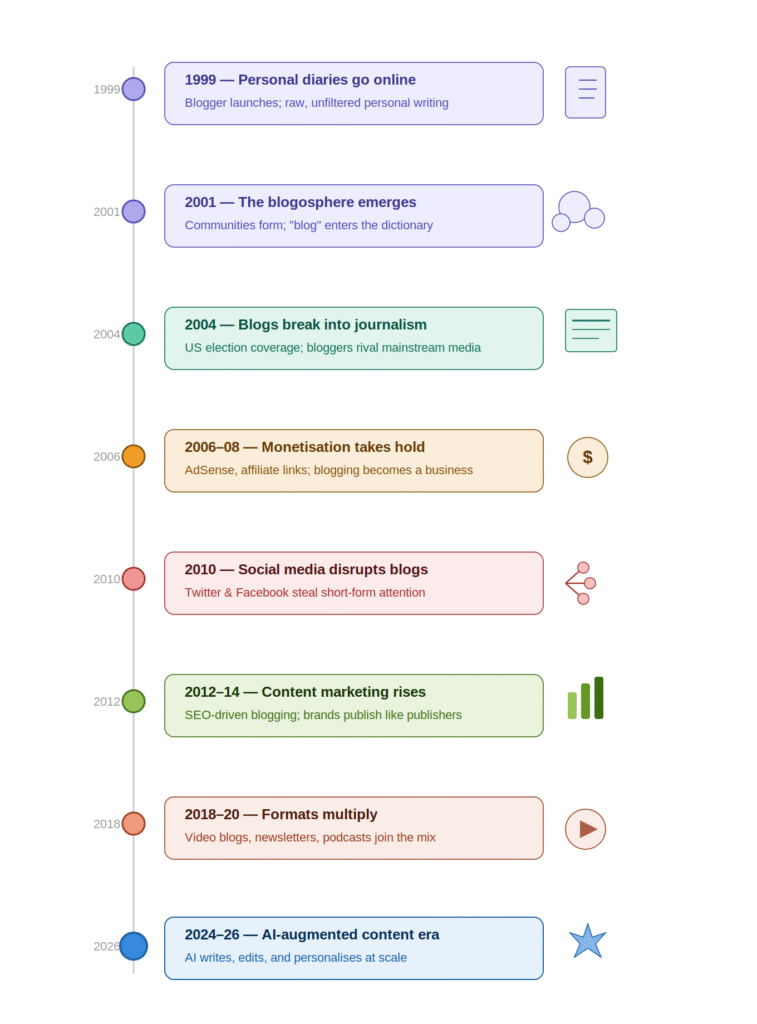
Blogging is the act of writing and publishing content on a blog. That’s really it at its core.
A blog is a website, or a section of one, where someone (or a team) publishes articles on a regular basis. These articles are usually written in a conversational tone, organized by date, and focused on a specific topic or niche.
The word “blog” comes from “weblog,” which was a term used in the late 1990s to describe online journals. People used them to document their daily thoughts, share personal stories, and connect with others on the internet. Over time, blogs evolved. They stopped being just personal diaries and became a real tool for education, business, journalism, and creativity.
Today, blogging is one of the most powerful ways to share information online. A well-written blog post can show up in search results years after it was published and still help thousands of people.
What Does a Blog Look Like?
This is a question I get a lot, and it’s a fair one. If you have never paid attention to blog pages before, it can be hard to picture what one actually looks like.
A blog page typically has:
- A header at the top with the blog name and navigation links
- A list of recent posts, usually showing the title, a featured image, and a short excerpt
- Individual post pages where the full article lives
- A sidebar sometimes, with categories, a search bar, or popular posts
- A footer with links to social media, a privacy policy, and other useful info
When you click on a blog post, you usually see:
- A big headline at the top
- A featured image below it
- The body of the article, broken into sections with subheadings
- Images or visuals in between the text
- A comments section at the bottom
- Related posts to keep readers engaged
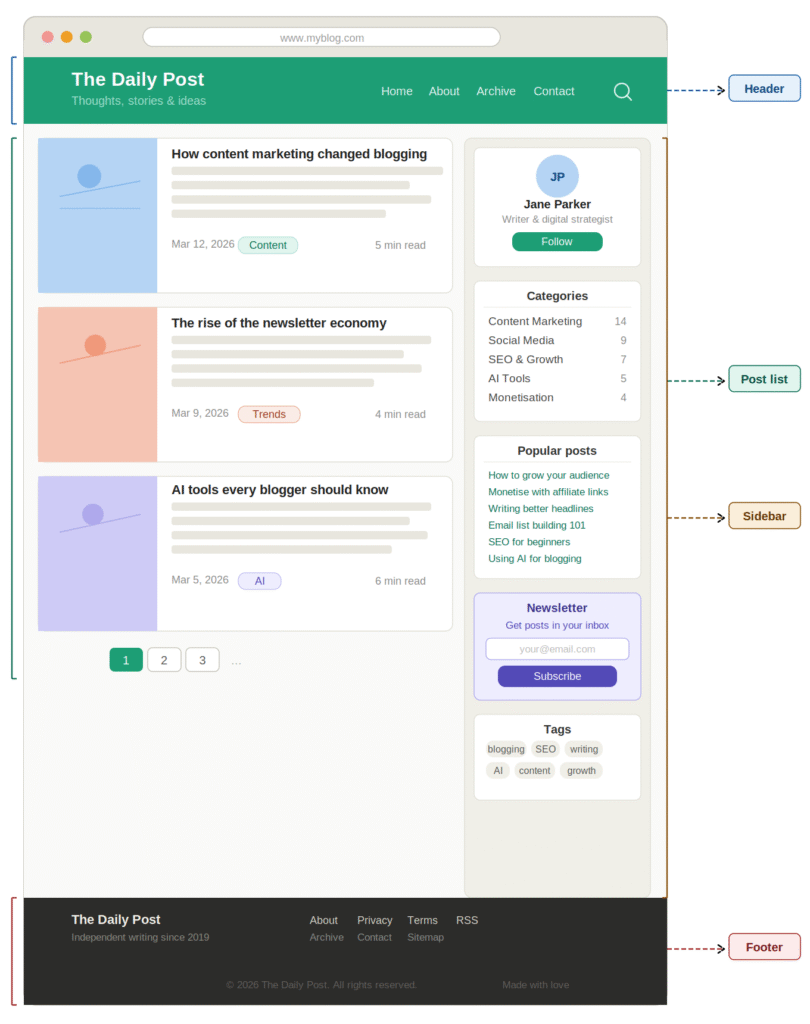
Different blogs look different depending on the theme and niche. A food blog will have lots of food photos and recipe cards. A tech blog might be more minimal and text-heavy. A travel blog might feel like a magazine with big images and destination guides.
But the structure underneath is usually the same.
Why Do People Start Blogs?
People start blogs for all kinds of reasons, and none of them are wrong. When I first started, I was not even sure what I wanted to get out of it. I just knew I had things to say and I wanted a place to say them.
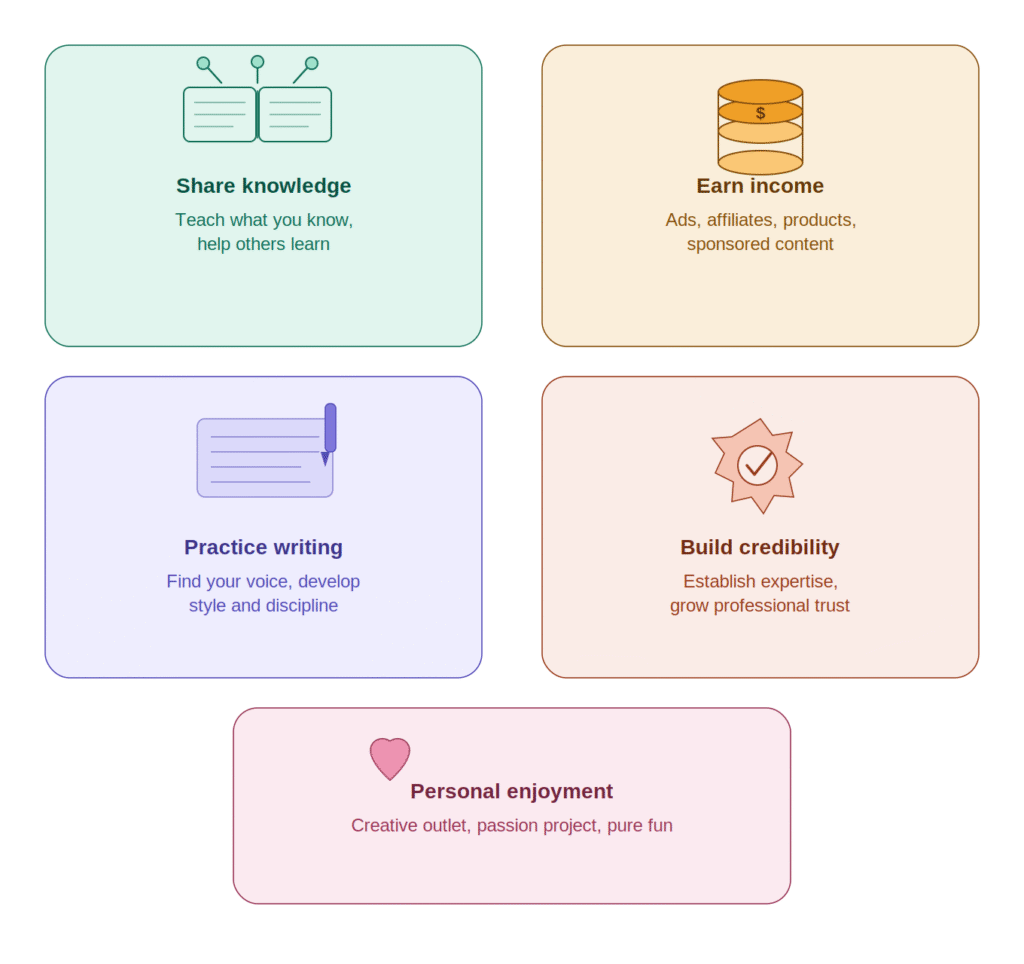
Over time I noticed that most bloggers fall into one of these categories:
1. They want to share knowledge
Some people blog because they know a lot about something and want to help others. Teachers, professionals, hobbyists, people who have learned the hard way. Blogging gives them a platform to share that knowledge without needing permission from a publisher or a media company.
2. They want to build a business
Blogging is also a legitimate business model. Bloggers can earn money through ads, affiliate marketing, sponsored posts, digital products, and services. Some people start a blog specifically to create a source of income. Others build a business around their blog after realizing it was getting real traffic.
3. They want to improve their writing
Blogging is one of the best ways to practice writing regularly. When you know people are going to read your work, you put more thought into it. Over time, your writing gets better in ways that are hard to achieve any other way.
I noticed this in my own journey. The more I wrote and published, the cleaner and sharper my writing became. It was not just practice. It was the feedback loop of putting real work out into the world.
4. They want to build credibility
A blog is essentially a public portfolio. If you are a freelancer, consultant, or professional, having a blog with well-written content on your area of expertise tells potential clients more about you than a resume ever could.
5. They just enjoy it
Some people blog because it brings them joy. No other reason needed.
How Do You Start a Blog?
Okay, let’s get practical. This is usually where people get stuck, so I am going to break it down as simply as I can.
Step 1: Pick a Topic (Your Niche)
Your blog needs a focus. It doesn’t have to be a super narrow topic, but it should be clear enough that the right people know it’s for them.
Think about what you know well, what you enjoy talking about, and what people actually search for. The best niches sit at the intersection of all three.
Some popular blog niches include:
- Personal finance and budgeting
- Health and wellness
- Food and recipes
- Travel
- Parenting
- Career and productivity
- Technology and software
- Creative writing and content
You do not need to pick a niche that is trending. You need to pick one you can write about consistently and confidently.
Step 2: Choose a Blogging Platform
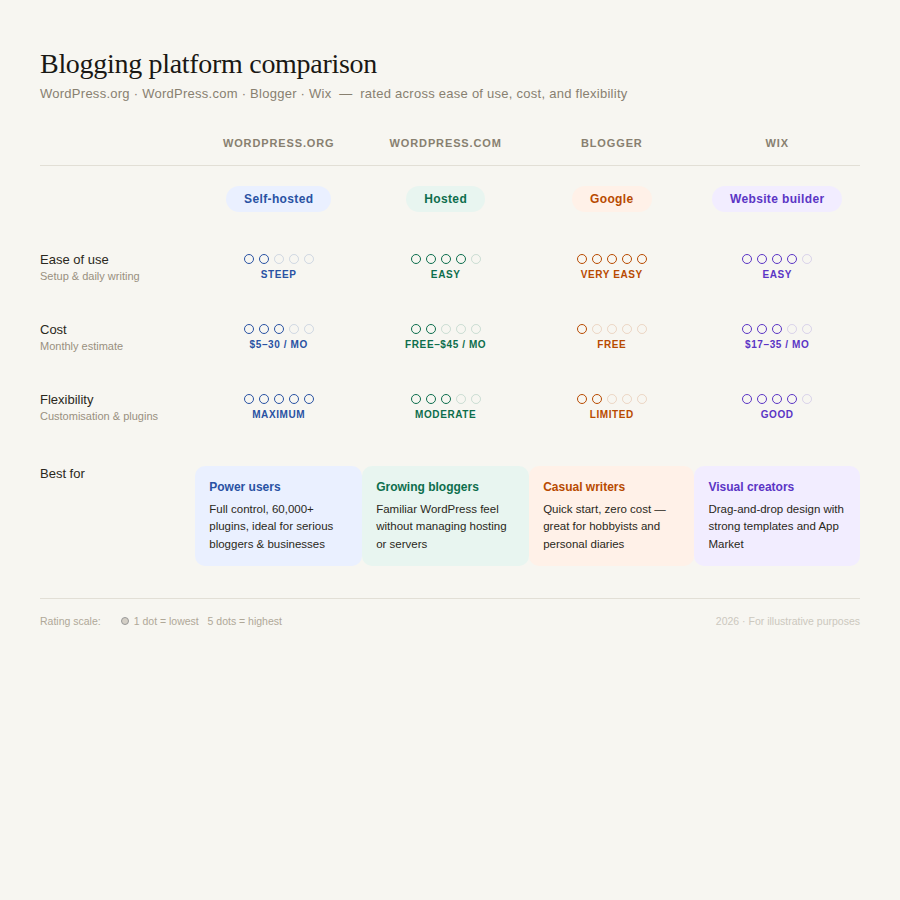
A blogging platform is the software you use to build and manage your blog. There are a few options, but the most widely used one is WordPress.org. Here is a quick comparison:
- WordPress.org: The most flexible option. You own everything. Requires a hosting plan and a little setup, but it gives you the most control long-term.
- WordPress.com: Easier to set up but with more limitations on free plans.
- Blogger: A simple free option from Google. Good for absolute beginners who want to start without spending anything.
- Wix or Squarespace: Drag-and-drop website builders that include blogging features. Easier to use but less flexibility.
Most serious bloggers end up on WordPress.org eventually. If you are planning to grow your blog into something meaningful, starting there makes sense.
Step 3: Get a Domain Name and Hosting
Your domain name is your blog’s address on the internet. For example, myblog.com. Your hosting is the service that stores your blog’s files and makes them accessible online.
When I picked my domain name, I kept a few things in mind:
- Keep it short and easy to remember
- Avoid hyphens and numbers if possible
- Make sure it reflects what your blog is about
- Check that it is available on social media too
Popular hosting services include Bluehost, SiteGround, and Hostinger. Most of them offer beginner-friendly dashboards and one-click WordPress installation.
Step 4: Set Up Your Blog
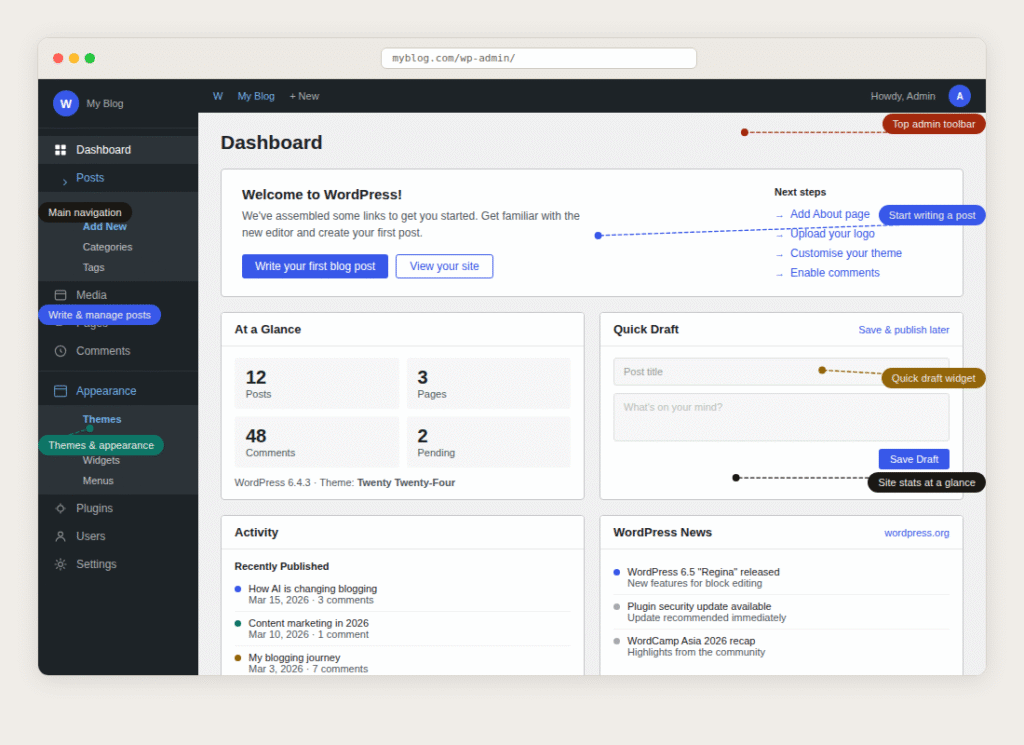
Once you have hosting and a domain, the next step is installing WordPress and picking a theme. A theme controls how your blog looks.
You do not need a premium theme to start. There are excellent free themes like Astra, GeneratePress, and Kadence that are fast, clean, and customizable. You can always upgrade later.
Set up a few essential pages before you start writing:
- About page: Tell readers who you are and why you started this blog
- Contact page: Give readers a way to reach you
- Privacy Policy: Required if you plan to use ads or collect emails
Step 5: Write Your First Post
This is the part most people overthink. They want the first post to be perfect. It won’t be. And that is fine.
Write about something you know. Be helpful. Be clear. Use subheadings to break up your content so it’s easy to scan. Add a relevant image. Proofread before you hit publish.
That’s really all you need to do to start. The quality will improve with every post you write.
What Makes a Good Blog Post?
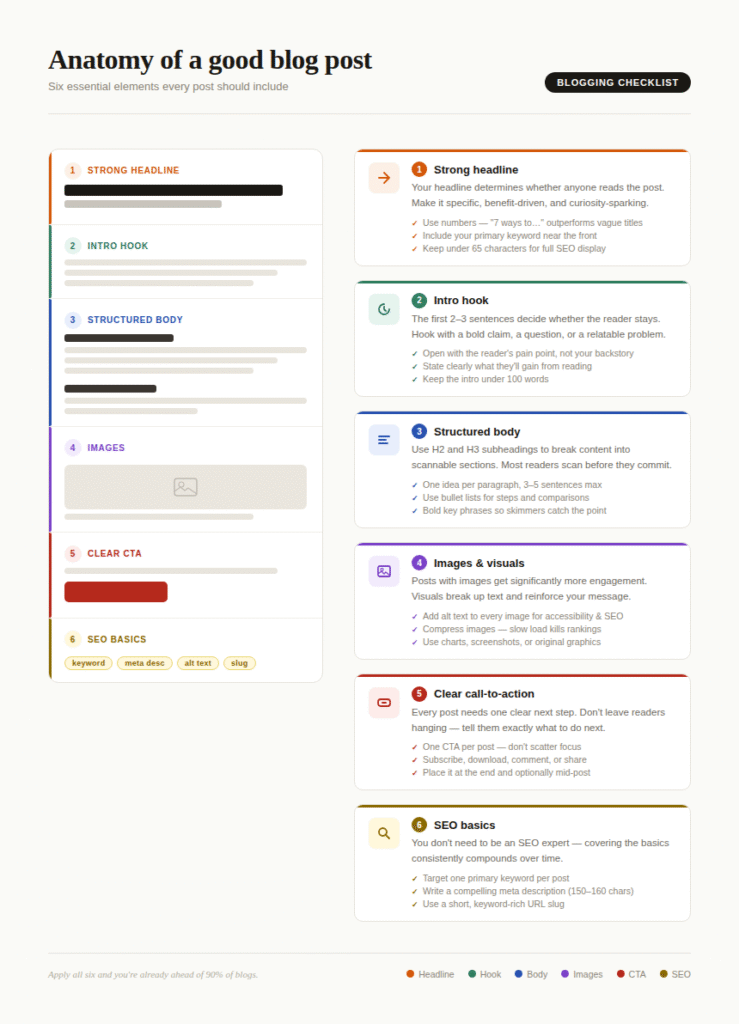
I have written dozens of posts over the years and I have noticed a clear difference between the ones that do well and the ones that get ignored. It usually comes down to a few things.
It solves a real problem
The best blog posts answer questions that real people are actually asking. Before you write, think about who you are writing for and what problem you are solving for them. If your post helps someone do something, understand something, or make a decision, it will always have value.
It is easy to read
Online readers scan before they commit. If your post is one giant block of text, most people will leave immediately. Break your content into sections. Use short paragraphs. Add subheadings every few hundred words. Use images to give readers’ eyes a break.
It has a clear structure
A good blog post usually follows a simple structure:
- An introduction that hooks the reader and tells them what they are about to learn
- Body sections that go deep on the topic, broken up with H2 and H3 headings
- A conclusion that wraps things up and gives the reader a clear next step
It is optimized for search (SEO)
Search engine optimization is the practice of writing blog posts in a way that helps them show up in Google search results. This matters because most blog traffic comes from search engines.
Basic SEO for bloggers includes:
- Using the main keyword in the post title and throughout the content naturally
- Writing a compelling meta description
- Using clear headings with relevant keywords
- Making sure your page loads fast
- Adding alt text to your images
You do not need to be an SEO expert to start. But learning the basics early will save you a lot of time later.
How Often Should You Post?
This is one of the most common questions beginners ask, and the answer is simpler than people expect.
Consistency matters more than frequency.
Posting once a week and sticking to it is better than posting five times one week and then disappearing for a month. Search engines and readers both reward consistency.
When I started, I committed to one post per week. That felt manageable. As I got faster at writing and more comfortable with the process, I could increase that if I wanted to. But I never posted just to hit a number. Every post had to be genuinely useful.
If you are just starting out, aim for one solid post per week. Focus on quality over quantity.
How Do Bloggers Make Money?
Let me be honest here: blogging takes time before it becomes profitable. I did not make money from my blog right away. But once I had built up a library of content and started getting consistent traffic, the income options became real.
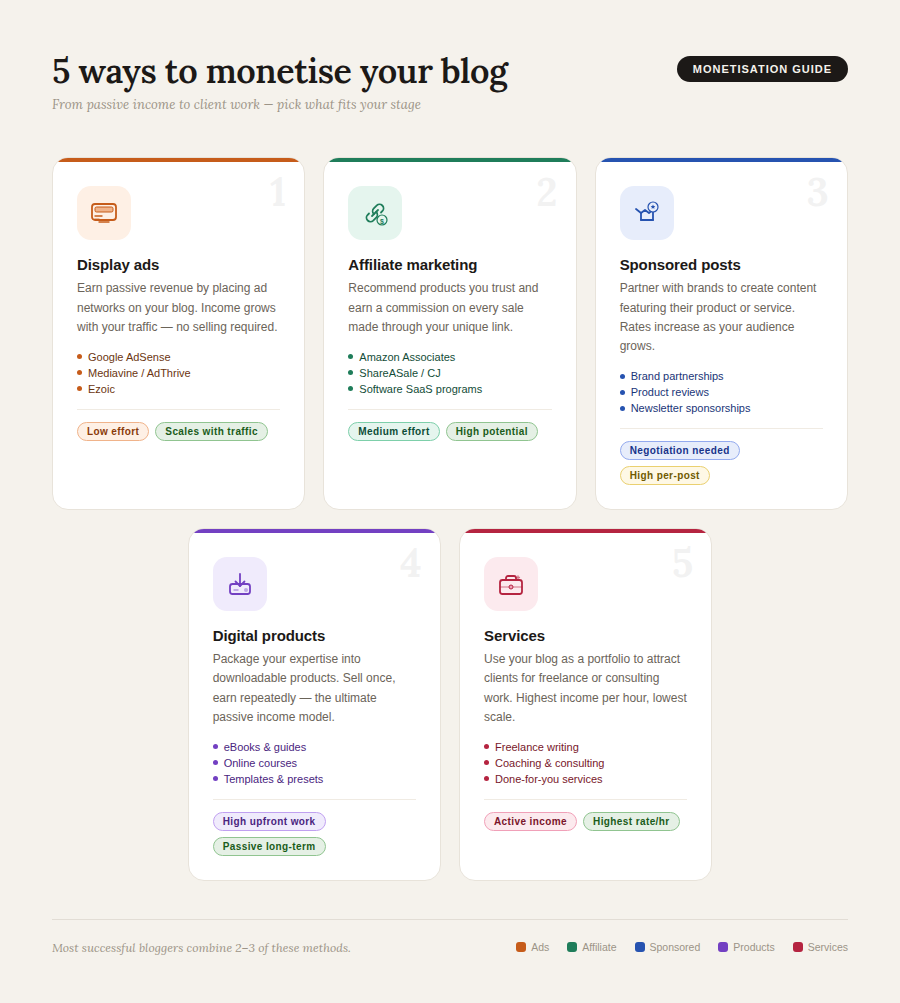
Here are the main ways bloggers earn money:
Display Advertising
You allow ad networks like Google AdSense or Mediavine to show ads on your blog. You earn money based on how many people view or click those ads. This works well once you have significant traffic.
Affiliate Marketing
You recommend products or services and earn a commission when someone buys through your link. This is one of the most popular monetization methods because it doesn’t require you to create your own product.
Sponsored Posts
Brands pay you to write content that features their product or service. As your blog grows, you will start getting outreach from companies who want to reach your audience.
Digital Products
Ebooks, templates, courses, and printables. These are things you create once and sell repeatedly. This is where a lot of experienced bloggers make the bulk of their income.
Services
Your blog can act as a portfolio that leads clients to hire you directly. Freelance writing, consulting, coaching, and design are all services bloggers offer off the back of their content.
Common Mistakes Beginners Make
I made most of these mistakes myself, so I’m not listing them to judge anyone. I’m listing them because I wish someone had told me sooner.
Trying to be perfect before publishing. Your first posts will not be your best. That’s normal. Publish anyway and improve as you go.
Writing for everyone. The more specific your audience, the more helpful your content can be. Write for one person, not the whole internet.
Ignoring SEO entirely. You do not need to obsess over it, but ignoring it means your content will have a hard time getting found.
Giving up too early. Most blogs do not take off in the first few months. The bloggers who succeed are the ones who kept going even when the traffic was low.
Copying other bloggers. Your unique perspective and voice are what will set you apart. Write in a way that only you can write.
Skipping the basics of good writing. Clear, readable, well-structured writing is what keeps people on your page and coming back. Investing time in learning the craft of writing is never wasted.
That last point matters more than most people realize. Blogging is fundamentally a writing craft. The better your writing, the more effective your blog will be, whether you are trying to educate, build an audience, or earn an income.
If you want to go deeper into that side of things, The Content Writing Craft is a great place to start. It is built specifically for people who want to write content that actually connects with readers, which is exactly what blogging requires.
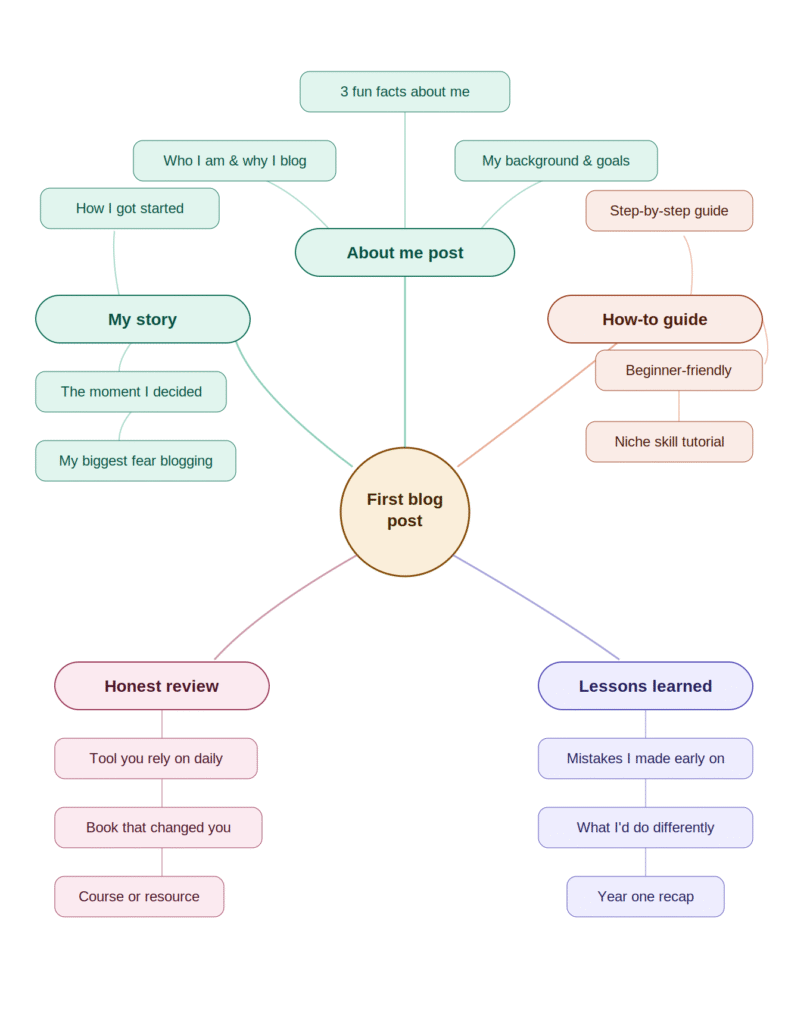
What Should You Write About First?
If you are stuck on what to write for your first few posts, here are some ideas to get you started:
- A personal story about why you started this blog and what readers can expect
- An answer to the most common question you get asked about your topic
- A beginner’s guide to the main topic of your blog
- A list of tools, resources, or tips you wish you had known earlier
- A comparison of two options your audience is likely choosing between
The best starting point is almost always something you already know well. Don’t try to write something impressive. Write something useful.
Do You Need to Be a Good Writer to Blog?
I get this question a lot and my answer is always the same: you need to be a clear writer, not a perfect one.
Blogging is not about writing prize-winning literature. It’s about communicating clearly and helpfully. You are trying to help someone understand something or solve a problem. Plain, direct language does that better than fancy prose.
The good news is that writing improves with practice. Every post you write makes you better. Every piece of feedback you get helps you see where you can do better next time.
I was not a great writer when I started. I am a better one now because I kept writing. That is not a special talent. It is just consistency.
Final Thoughts: Is Blogging Worth It?
I have been asked this question more times than I can count. And yes, I think it is worth it. But not for the reasons most people expect.
It is worth it because blogging teaches you to think clearly. Writing a post forces you to organize your thoughts, question what you know, and figure out how to explain things in a way that makes sense to someone else. That skill carries over into everything.
It is worth it because it builds something real. Unlike a social media post that disappears in 48 hours, a well-written blog post can bring in readers for years.
It is worth it because it connects you with people. The comments, the emails, the messages from readers who found exactly what they needed in something you wrote. That never gets old.
And yes, it can also be financially worth it. But that takes time and consistent effort. Treat it like a craft you are developing, not a shortcut to quick cash.
If you are thinking about starting a blog, do not wait until everything is perfect. Pick a topic, set up a simple site, write your first post, and publish it. Everything else you can figure out along the way.
That is how it worked for me. And honestly, I think it is how it works for most people who stick with it.
Quick Summary
Here is everything we covered, in brief:
- Blogging is writing and publishing articles on a blog, regularly and with purpose
- A blog page has a header, post list, individual post pages, and a footer
- People blog to share knowledge, earn money, improve writing, or build credibility
- To start a blog: pick a niche, choose a platform, get a domain and hosting, set up your site, and write your first post
- Good blog posts solve real problems, are easy to read, and have a clear structure
- Consistency matters more than frequency when it comes to posting
- Bloggers earn through ads, affiliate marketing, sponsored posts, digital products, and services
- The biggest mistakes are perfectionism, ignoring SEO, and giving up too early
- You do not need to be a perfect writer. You need to be a clear, helpful one
Ready to start your blog?
The best time to start is right now. Even a basic post on a free platform is better than a perfect idea sitting in your head. Write, publish, learn, repeat. That is the whole game.